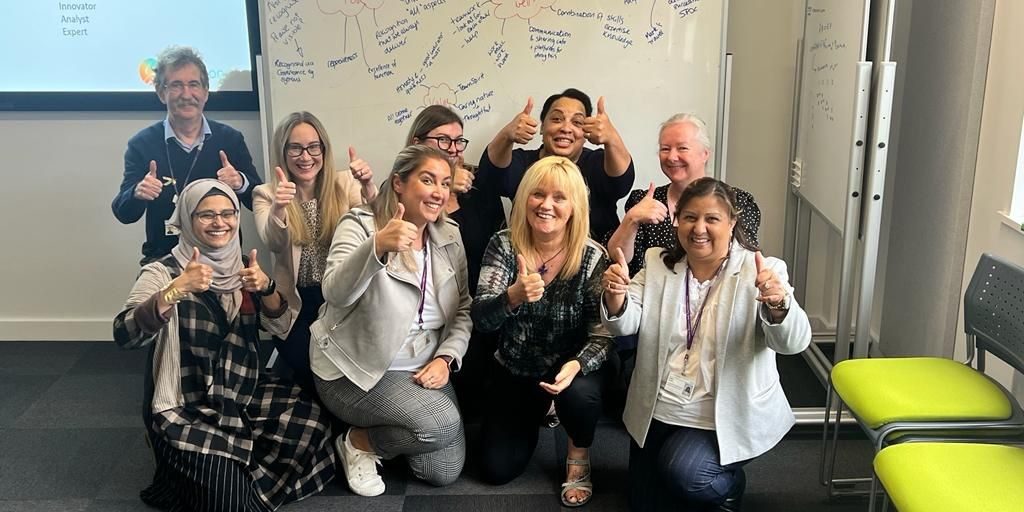
Meet the team behind c4c! We are a diverse group of people from many different backgrounds, but all of us are working towards a common goal: better medicines for children through European clinical trials. Today’s spotlight is on Sabah Attar, from the University of Liverpool.
In the realm of pediatric clinical research, there are unsung heroes who work tirelessly behind the scenes to ensure the success of groundbreaking research. Sabah is one such individual, a dedicated member of the leadership team for the conect4children (c4c) project, spearheading efforts to revolutionize paediatric clinical trials across Europe. In this article, Sabah graciously shares her journey, challenges and aspirations within the project.
With an engineering background and a doctorate in medical materials, Sabah has focused predominantly in clinical research management within the University of Liverpool. With over 15 years’ experience in clinical research management, she discovered her passion for coordinating pediatric clinical trials during those early years. Her extensive expertise in establishing trial portfolios and streamlining processes within the Medicines for Children’s Research Network in England and the National Institute for Health Research (NIHR) UK makes her invaluable to the c4c project.
As Sabah explains, her role within c4c can be likened to that of a leading operations or service delivery in a large multi- national organisation. She oversees the development and implementation of processes which support the proof of viability trials across all participating countries. Working in unison with Penta and AIDFM, the University of Liverpool serves as the Network Infrastructure Office (NIO). Sabah and her team work closely with trial teams, sponsors and national hubs, ensuring seamless coordination, effective collaboration and the smooth delivery of c4c services.
Academic vs. Industry Proof of Viability Trials: What’s the Difference?
You might be wondering about the distinction between academic and industry trials within the c4c project. Sabah clarifies that while academic trials are funded through the c4c grant in an open call selection process, while industry trials are funded through the pharmaceutical company. The focus for both remains on establishing consistent processes for feasibility, trial setup and execution support. The learning points on this journey from selection to recruitment for the Non-Industry trials have informed the processes for the industry funded trials. While each trial team and sponsor may have unique operational requirements, Sabah and the NIO team strive to strike a balance between consistency and flexibility, tailoring their processes to meet the specific needs of each trial. Sabah highlights that innovation and collaboration as being key pillars of the work undertaken.
Navigating Current Challenges
Undoubtedly, with the leadership role that she holds, Sabah faces significant challenges. One of the greatest hurdles is navigating a dynamic environment where simultaneous learning and implementation are crucial. With multiple partners and diverse operational requirements, effective communication and adaptability are paramount. Collaboration with all stakeholder teams at an early stage has become a cornerstone and this has been instrumental to ensure relations are built, expectations are met, with all shared learnings and experiences feedback contributing to the ongoing process refinements and improvements.
When asked about her primary contacts within each country, Sabah highlights the importance of early engagement with all trial teams, particularly sponsors, national teams, chief investigators and operational feasibility members. This was an important learning point realized at the beginning of project start up. At the National Hub level, Sabah and the NIO team liaise regularly with the National Hub teams, sharing information and linking the project’s strategic perspectives and the operational requirements of the trial portfolio.
A crucial aspect of her role has been the development of the c4c governance processes within WP2 and with the Task 2.7 team development of the quality framework. Sabah emphasizes the quality processes and improvement work, co-led by with Sabrina Pierre of INSERM , has been ground- breaking in many ways as there is very little published information for how clinical research organisations or infrastructures have established and maintained quality across all key workstreams taking into account different requirements and ways of working across countries and stakeholders. The work is very broad and ensures that defined standards have been set and will be maintained for the network, National Hubs and sites. National Hub and Industry partners members have been consulted on and have contributed to all process design, fostering a collaborative environment.
The future of c4c
Sabah’s enthusiasm for the future of c4c shines through to her NIO team members who find this very motivational during times when the project becomes overwhelming. As we get closer to the end of the project funding, Sabah’s role is crucial to for the future of c4c, particularly the smooth transition of existing services and c4c infrastructure to the successor organisation or Stichting. Many achievements have been recorded across the project and these have collectively informed efficient ways of working across multiple countries, which must be continued and built upon. Sabah expresses her desire to continue supporting with the transition to the c4c-S, which would benefit greatly from the added value of her experience and expertise.
It’s worth noting that while Sabah’s dedication to the c4c project is apparent, she also contributes to other European projects that advance pediatric clinical research. Her commitment to improving the health of children through research to make paediatric medicines safer remains unwavering!
In conclusion, Sabah’s passion and expertise in pediatric clinical research is a huge advantage to the c4c project. Sabah credits her success within her role to the unwavering and consistent support of the immediate ULIV team. The role of the national hubs has been vital and the success of the c4c project would not have been possible without all their sheer hard work and determination. The collaborative support of the National Hubs and the expertise of Sabah and the NIO team have been a driving force behind the harmonization of processes and coordination of trials management across Europe.. As the c4c project continues to forge ahead with a new structure, Sabah’s commitment to excellence will ensure that the legacy of the c4c pan European paediatric clinical trials network will thrive, benefiting children with improved access to medicines across the continent and beyond.